
10 Digital Tools Every Kenyan Business Owner Should Know in 2025 (And How to Use Them)
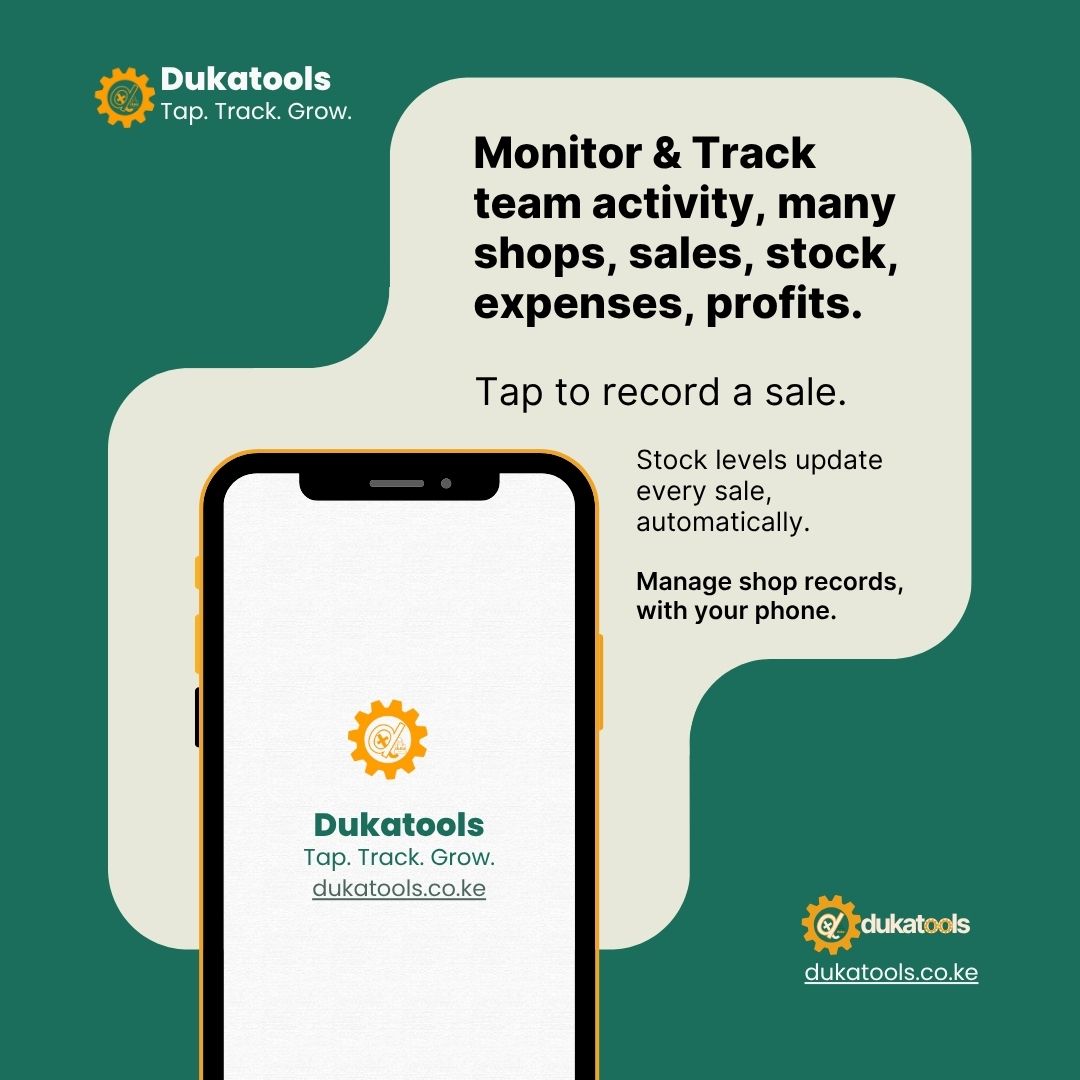
How small shops and entrepreneurs in Kenya are using digital tools to track sales, payments, manage stock, and grow faster; and why Dukatools stands out.
Digital Tools Every Kenyan Business Owner Should Know in 2026: The Ultimate Guide for SMEs
Part 1. - Why Business Owners are Moving Towards Digital Tools Now in Kenya
The Kenyan economy is undergoing a massive transformation. The digital revolution is not coming; it is already here. Projections suggest Kenya’s digital economy will reach $4 billion by 2025.
This growth is fueled by small and medium enterprises (SMEs) actively embracing innovation and digital payments to boost their resilience and expansion. For any shop owner today, moving your operations from a paper ledger to a digital system is the fastest path to stability and growth. If a business is not digital, it risks being left behind.
The reality of running a shop in Kenya requires tools that meet specific local needs. Complex, expensive foreign software that ignores the necessity of KRA compliance, or fails to integrate smoothly with M-Pesa, quickly becomes a time sink, not a solution. The successful tools must be simple, mobile-friendly, affordable, and built to handle the unique demands of the Kenyan market.
In this discussion, we focus on the 10 most essential digital tools specifically tailored for real Kenyan businesses. This helps answer the actual questions shop owners are asking online, ensuring that businesses can easily find the solutions they need.
Whether they are looking for affordable POS systems for shop owners in Nairobi or the overall best digital tools for Kenyan small businesses 2026 this guide will help you make a better decision.

2. Tool 1: KRA eTIMS/Tax Management Solution (The Compliance Anchor)
2.1. What is eTIMS and How it Works
The electronic Tax Invoice Management System, known as eTIMS, represents the most critical regulatory shift for Kenyan commerce. eTIMS is a software solution developed by the Kenya Revenue Authority (KRA) for tax invoicing.
The law now mandates that all persons engaged in business must register for eTIMS and issue electronic tax invoices. This requirement applies to all businesses, regardless of whether they are registered for VAT or not. This change has shifted digitization from being an optional benefit to being a mandatory part of survival.
2.2. Benefits and Contribution of eTIMS to Growth (Mandatory Survival)
Compliance is now non-negotiable. Firstly, eTIMS compliance is required to receive a Tax Compliance Certificate (TCC), which is essential for business continuity and dealing with other institutions. Secondly, and crucially, for any person to claim a business expense, the expense must be supported by an electronic tax invoice.
This means if a small shop owner fails to issue e-invoices, their business customers cannot legally deduct that purchase. This makes eTIMS a prerequisite for being a reliable supplier in the B2B supply chain, giving compliant shops a competitive advantage. Furthermore, KRA notes that eTIMS helps reduce compliance costs, offers flexibility, assists with basic stock management through a module, and simplifies the overall return filing process.
2.3. Tradeoffs and Challenges
While the core eTIMS solution is provided free by KRA, complexity arises during integration.4 Businesses must choose the correct implementation path: the simple Online Portal (for service providers), the downloadable eTIMS Client (for retailers dealing in goods), or the system-to-system integration (VSCU/OSCU) for large volumes or existing ERP users.
Integrating an existing POS or invoicing system with eTIMS requires technical expertise and may involve costly third-party integrators, or purchasing specialized third-party software like TallyPrime. This need for a seamless KRA eTIMS compliant software for SMEs Kenya quickly adds hidden costs to global solutions that lack local integration.
2.4. Costs of eTIMS to your business
The primary eTIMS solutions (Portal and Client) are free from KRA.4 Costs are generally associated with purchasing compatible, certified accounting or POS systems, or hiring IT professionals for complex system integrations. Learn More about eTIMS here
Foreign software often fails to meet strict local compliance standards, forcing shop owners to pay consultants or run complicated dual systems. Dukatools is built in Kenya, for Kenya. It offers seamless, built-in eTIMS compliance right out of the box, saving the business owner the high cost and headache of fragmented third-party integration. Start issuing KRA-compliant invoices in minutes—Sign up for Dukatools today!
3. Tool 2: Mobile Money Solutions (M-Pesa Paybill vs. Pochi la Biashara vs. Till)
3.1. The Digital Payment Core
Mobile money is the indispensable backbone of Kenyan commerce. With over 85% of Kenyans having accessed mobile money services, it is the primary method of transaction. Embracing platforms like M-Pesa is vital for boosting operational efficiency and improving cash flow management.
3.2. Benefits and Contribution to Growth
Micro-businesses often start with Pochi La Biashara. Pochi’s core function is financial discipline; it allows the business owner to easily separate their business income from personal funds, which is a major step toward better financial planning. The sign-up process is simple, requiring no paperwork. Pochi also allows owners to earn a 5% commission on airtime sales and protects received payments from being reversed without approval. As a business grows, it usually upgrades to the Business Till (Lipa na M-Pesa). The Till offers a more professional appearance and is generally preferred for higher transaction volumes, featuring competitive capped transaction rates.
3.3. Tradeoffs and Challenges
Pochi is excellent for the informal sector but its transaction records are often hard to integrate into formal accounting software once the business starts scaling. For both Pochi and the Till, the biggest challenge for the business owner is administrative overhead. Manually checking M-Pesa messages or statements and reconciling them against physical sales records consumes valuable time. The administrative complexities of separating sales records from funds is often why a shop owner will research the difference between a simple payment solution versus a structured system, comparing the whatsapp business vs till number for Kenyan SMEs.
3.4. Costs
Customers typically pay no charge when paying a business via M-Pesa Till (except at fuel stations).10 The cost is absorbed by the business. The Business Till charges a maximum of 0.55% per transaction, capped at KSh 200, with transactions of KSh 200 or less being free to receive. Learn more about MPESA for business here
Many business owners spend hours manually verifying transactions and trying to reconcile their Till statements. Dukatools functions as the essential integration layer. It connects directly to MPESA payments, automatically logging the income and linking it to the precise sales record. Get real-time cash flow and Integrate your M-Pesa with Dukatools now!
4. Tool 3: Point of Sale (POS) Systems and Inventory
A modern Point of Sale (POS) system is much more than a cash register; it is the central nervous system of a retail operation. It replaces manual ledgers, calculators, and handwritten sales notes, providing instant, accurate sales data. For Kenyan retailers, the POS system is primarily an inventory management tool that also processes transactions.
4.1. Benefits and Contribution to Growth
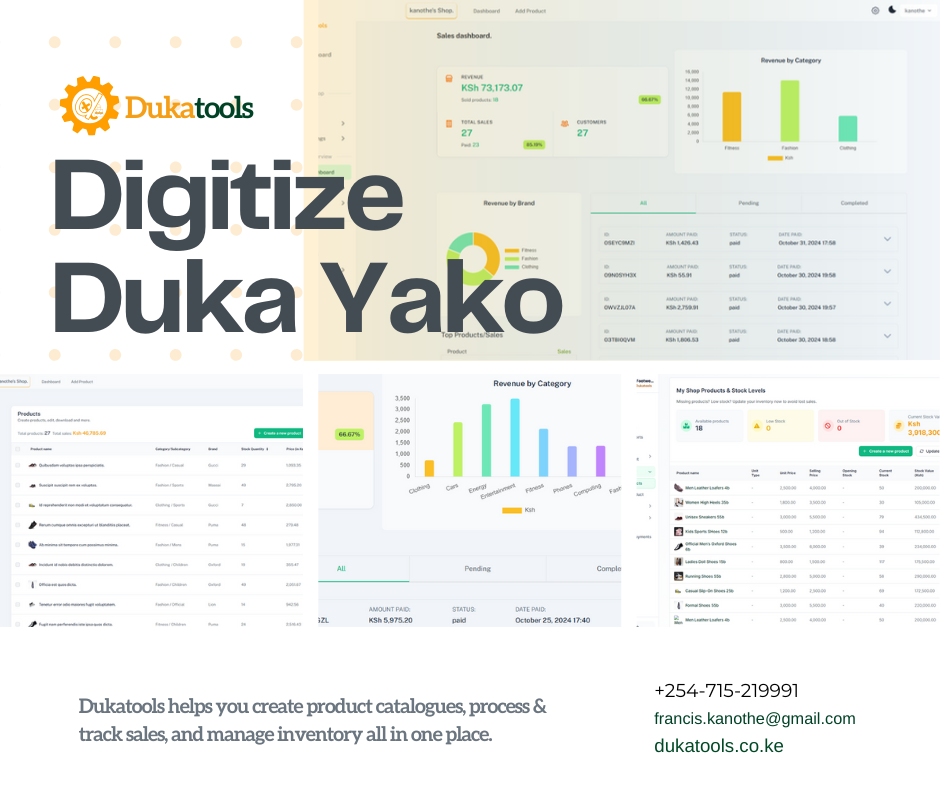
The POS system dramatically improves operational efficiency. It facilitates fast checkout, leading to better customer experiences. Its most vital function is real-time inventory management. Accurate stock control is paramount for profitability, preventing lost sales from stockouts, and eliminating losses from theft or spoilage. Local POS providers, such as Dukatools, Uzapoint, are successful because they understand and prioritize deep integration with local requirements, including M-Pesa. With real-time sales reports, the business owner can quickly identify best-selling products and optimize purchasing cycles.
4.2. Tradeoffs and Challenges
POS systems require an investment in both software and potentially hardware (like a tablet or scanner). Global POS systems, such as Lavu, can be expensive, starting at $59 per user per month annually. For the Kenyan market, stability is a key challenge, meaning systems must have a reliable offline mode. The ultimate goal is finding an affordable POS systems for shop owners in Nairobi that combines low cost with essential local features like KRA compliance.
4.3. Costs
Subscription costs vary widely depending on features and scalability. Local providers often offer competitive, flexible monthly pricing to cater to the cost-sensitive SME market.
Fragmented systems force the shop owner to purchase multiple applications: one for sales, one for inventory, and one for compliance. Dukatools offers a mobile-first POS system designed specifically for Kenyan retail. It is an affordable and robust simple inventory management app for Kenya that processes M-Pesa transactions and is instantly KRA-compliant. Stop guessing about your inventory. Try Dukatools POS today!
5. Tool 4: Simple Cloud Accounting Software
5.1. Moving Beyond Spreadsheets
Maintaining good financial records is critical; "Good financial management is the backbone of a healthy business". Manual bookkeeping is slow, error-prone, and can result in financial mismanagement or tax fines. Cloud accounting software automates these processes, reducing errors and saving significant time.
5.2. Benefits and Contribution to Growth
Cloud accounting streamlines financial operations. It allows for the creation and sending of professional, customizable invoices. It makes expense tracking simple, which is vital for maximizing legitimate tax deductions. Critically, it generates instant financial reports, like Profit and Loss statements, which moves the owner "from guessing to knowing" their company's financial health.
5.3. Tradeoffs and Challenges
For micro-businesses and freelancers, free tools like Wave Accounting are appealing, offering free core functions such as invoicing and simple reporting. However, these free solutions quickly become limiting as the business grows, typically lacking advanced features like deep inventory tracking or comprehensive local payroll functions. When scaling, businesses must transition to paid, scalable solutions like Zoho Books or FreshBooks, which, while affordable for entry-level plans, require ongoing monthly payments.
5.4. Costs
Wave Accounting's core bookkeeping features are free. Zoho Books is cost-effective, offering a free plan for very small businesses and paid standard plans starting affordably for those needing more features.
A common issue is trying to force a free invoicing tool to manage complex stock and sales data. Dukatools integrates essential accounting features right into its POS and inventory system. This eliminates the need for two separate, expensive accounting software subscriptions. Simplify your books with the Dukatools app!
6. Tool 5: Affordable E-commerce Website Builder/Hosting
6.1. Owning Your Digital Space
While social media is essential for generating leads, a dedicated e-commerce website is necessary for professionalism and scaling. A website allows for 24/7 autonomous sales and establishes credibility, boosting customer trust.

6.2. Benefits and Contribution to Growth
A website grants the business owner full control over branding, user experience, and customer data, unlike selling solely on rented social media space. This control is critical for long-term branding and marketing efficiency. Furthermore, a .co.ke domain enhances local credibility.
6.3. Tradeoffs and Challenges
The primary obstacle for SMEs has historically been the high initial development cost. Custom e-commerce builds can start at KSh 75,000 plus VAT for a basic starter package. This initial investment, combined with ongoing maintenance and security updates, is often prohibitive. However, the basic infrastructure component, covering the cost of running an e-commerce website in Kenya, has become highly affordable.
6.4. Costs
Basic web hosting packages in Kenya, often including a free .co.ke domain, start as low as KSh 315 per month when paid annually.18 The major cost variable remains the platform and development fee.
The cost of custom website development is a major barrier. Dukatools provides a powerful shortcut. Since all inventory and pricing data is already logged in the POS, Dukatools can instantly generate a simple, mobile-friendly online product catalogue or ordering link. This gives the business a professional digital storefront without the development cost. Start selling online without the huge development cost. Activate your Dukatools catalogue today!
7. Tool 6: WhatsApp Business App
Social commerce—the ability to turn posts, videos, and chats into sales—is transforming the Kenyan marketplace. Given that most customer communication and order placement happen on chat, the dedicated WhatsApp Business app is essential for professionalizing these interactions.
7.1. Benefits and Contribution to Growth
The WhatsApp Business app builds professionalism and trust by allowing the creation of a verified business profile, including location and working hours. It dramatically improves efficiency through automation tools like Quick Replies, Greeting Messages, and Away Messages. It also allows the business owner to create product Catalogs, turning the chat interface into a mobile storefront.
7.2. Tradeoffs and Challenges
The primary limitation for scaling SMEs (1–20 employees) is that the free app only supports one user on one device. This bottlenecks growth when sales volume increases. Furthermore, orders placed via chat, while convenient, are disconnected from inventory and sales records. This fragmentation forces manual data entry, leading to errors. Businesses needing multi-agent support and CRM integration must move to the complex, paid WhatsApp Business API, usually through third-party integrators.
7.3. Costs
The basic WhatsApp Business App is free. Moving to the API involves complexity and paid integration services.
The main operational pain point for social commerce is data fragmentation. Dukatools solves this by allowing sales teams to instantly capture orders received on WhatsApp directly into the POS system. This automatically logs the sale, reserves the stock, and generates an invoice, minimizing manual transcription errors.
8. Tool 7: Simple Mobile CRM/Lead Tracker
8.1. Organizing Your Leads
A Customer Relationship Management (CRM) tool ensures that as a business grows, potential sales opportunities are not lost due to manual neglect. A CRM replaces disorganized notebooks and spreadsheets with a structured digital process for managing customer interactions.
8.2. Benefits and Contribution to Growth
A CRM offers clear sales pipeline visibility, allowing the owner to track precisely where each customer is in the sales cycle—from initial inquiry to closed deal. It provides automated reminders for follow-ups, preventing missed sales opportunities. Local CRMs, like Workpex, specialize in integrating with key Kenyan lead sources like WhatsApp and Meta Ads.
8.3. Tradeoffs and Challenges
The value of a CRM depends entirely on the discipline of the sales team to consistently update their activities and notes. Separate CRM subscriptions are typically priced monthly per user, adding to operational overhead. For small shop owners, the massive feature sets of global CRMs are often overkill; they require a simplified, affordable tool that links customer contact directly to transaction history.
8.4. Costs
CRM costs are usually subscription-based. Businesses should seek out platforms specifically branded as the "most affordable CRMs for small businesses" in Kenya.
Businesses should not pay for a complex, external CRM just for basic contact management. Dukatools includes a simplified customer management module integrated directly into the core system. This feature automatically tracks and logs all past purchases and interactions made through the POS. Customer data remains up-to-date and ready for targeted sales efforts. Stop losing leads due to forgetfulness and Use Dukatools CRM to Track Customers
9. Tool 8: Digital Design Tool (Canva)
9.1. Professional Looks Made Simple
To succeed in platforms like Instagram, TikTok, and WhatsApp, businesses require high-quality, eye-catching graphics for promotional materials. Canva makes professional design accessible to every business owner, regardless of their design skills.
9.2. Benefits and Contribution to Growth
Canva allows for rapid content creation for daily social media posts, flyers, and digital posters. Using its professional templates ensures a consistent, high-quality look, which builds brand trust and attracts more customer engagement. This self-service approach saves money by significantly reducing reliance on expensive graphic designer fees.
9.3. Tradeoffs and Challenges
While the free version is extremely powerful, advanced branding tools—such as custom brand kits, instant background removal, and premium stock content—require the paid Canva Pro subscription.25 The platform requires a reliable internet connection for smooth template access and cloud saving.
9.4. Costs
A robust Free version is available. Canva Pro is a paid monthly or annual subscription.
10. Tool 9: Basic Web Analytics (Google Analytics)
10.1. Knowing Your Audience
For any business with a digital storefront, a landing page, or even a simple informational website, web analytics are mandatory. Tools like Google Analytics (GA) function as a digital "online compass," providing necessary data about online visitor behavior.
10.2. Benefits and Contribution to Growth
GA is a free tool that tracks where customers originate (e.g., specific search results, social media campaigns) and how they interact with the online content. This data is essential for assessing the performance of online initiatives, such as Pay-Per-Click (PPC) advertising, ensuring that marketing spend is driving tangible results.
10.3. Tradeoffs and Challenges
GA requires technical implementation to place the tracking code on the website. The volume of data generated can be overwhelming, often requiring time or training to interpret effectively.
10.4. Costs
Google Analytics is free to use.
While GA helps track external traffic, Dukatools clarifies the internal profits. Business owners should use Dukatools' comprehensive sales reporting to match traffic patterns seen in GA with actual, finalized profit numbers. This comparison closes the marketing loop and provides accurate Return on Investment (ROI) data.
11. Tool 10: Cloud Storage and Backup
11.1. Protecting Your Assets
A business generates crucial digital records daily, including KRA compliance receipts, contracts, and sales data. Cloud storage ensures these vital assets are protected from physical risks like theft, device failure, or fire.
11.2. Benefits and Contribution to Growth
Cloud storage provides automatic, remote backup capabilities, which is crucial for disaster recovery and business continuity. It also ensures accessibility, allowing staff to access necessary files from any authorized mobile device or computer.
11.3. Tradeoffs and Challenges
The cost of generic cloud storage is a rising concern for the Kenyan SME. For example, Google LLC has significantly increased annual storage subscription charges for the basic 100GB Google One package for Kenyan users by 19%, now costing approximately Sh2,500 annually.
This upward cost pressure reinforces the need for businesses to minimize reliance on external, general cloud storage for core operational data. Security also requires strict adherence to strong passwords and two-factor authentication.
11.4. Costs
General cloud storage starts free, with paid subscriptions scaling up from about Sh2,500 annually for the basic package.
The business's most valuable assets—sales records, KRA compliance data, and inventory levels—are generated within the POS/Accounting system. Instead of relying on a separate, rising-cost cloud service to back up these operational records, Dukatools ensures all core business data is securely stored and backed up on its own reliable cloud infrastructure, reducing the total cost of ownership. Focus on sales, not backups. See how secure your data is with Dukatools!
12. Final Words: "Have a Digital Toolkit for your business"
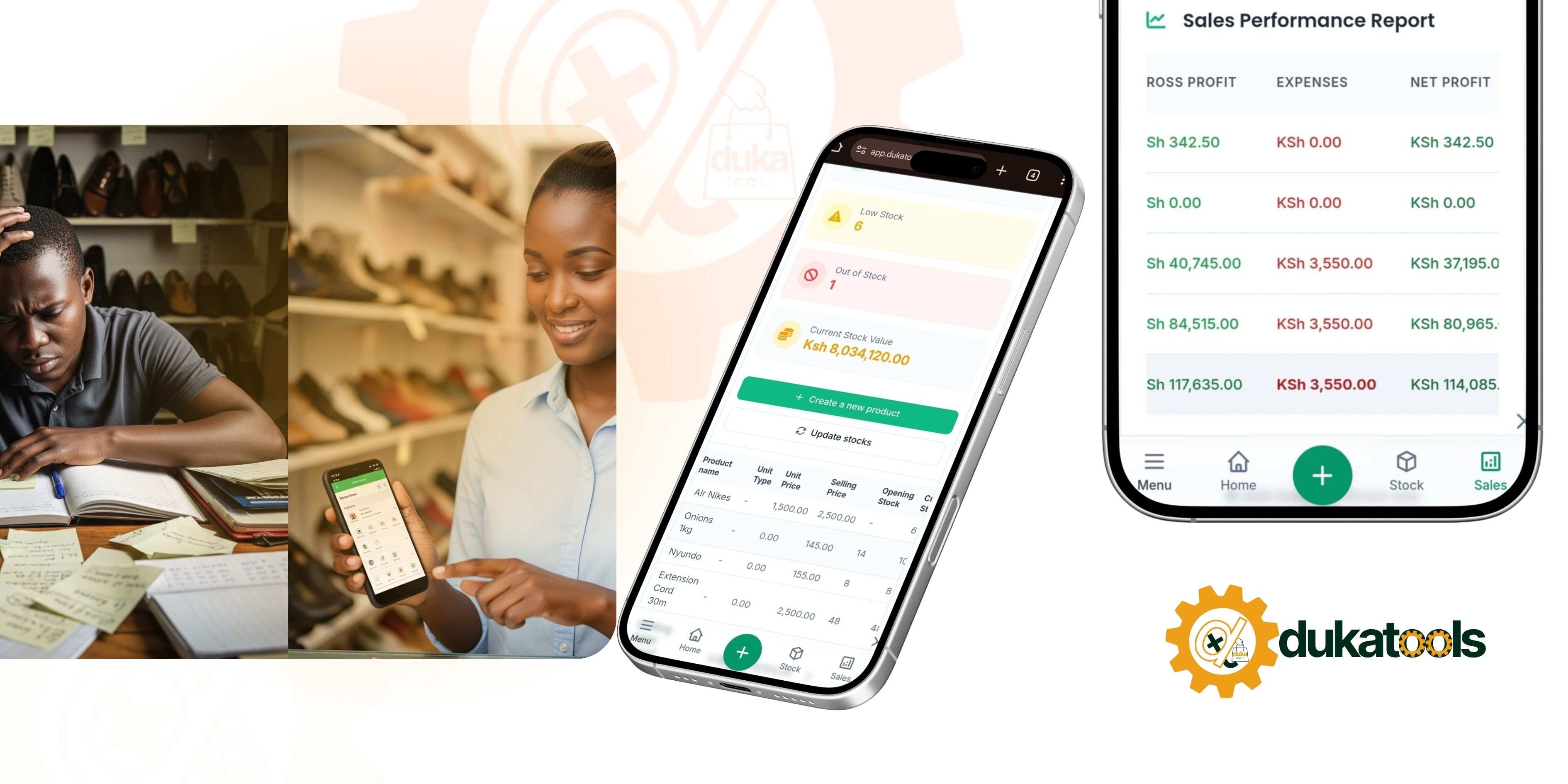
Digital adoption is no longer a strategic choice for Kenyan SMEs; it is the fundamental vehicle for growth and compliance. The analysis shows that the biggest barrier to scaling is the reliance on fragmented systems. When a business uses a free invoicing tool, a manual ledger for stock, and must pay a consultant for KRA compliance, the resulting errors and time waste quickly negate any apparent cost savings.
The most effective strategy is the adoption of a single, integrated, localized platform. A system like Dukatools saves the business owner money by consolidating the functions of multiple platforms (POS, Inventory, Accounting, CRM, and Compliance) into one affordable, recurring payment. It saves time by eliminating manual data entry and reconciliation between M-Pesa statements and sales reports.
Most importantly, as a local solution, it guarantees seamless KRA eTIMS compliance, a mandatory factor for competitiveness in 2026.By leveraging an integrated platform, businesses can transform their operations from complex, manual tasks into simple, automated processes, freeing up owners to focus on what matters most: serving customers and achieving growth.
Stop managing your growing business with ten separate tools and the administrative chaos that comes with them. Take the first simple step toward operational excellence. Find the single solution that integrates every essential function your Kenyan business needs, from KRA compliance to M-Pesa payments.
Start your free trial with Dukatools today and experience the difference of a truly integrated system.